29 April 2026
Student contributions to thought leadership
Students from the University of Edinburgh Business School’s MSc in Climate Change Finance and Investment and MSc in Global Strategy and Sustainability have contributed a series of thought leadership pieces that reflect their diverse academic interests and career aspirations.
These short articles tackle real-world sustainability challenges and emerging trends in finance, business and strategy, economic and urban development.
Each piece demonstrates the critical thinking, applied knowledge, and forward-looking perspective our students bring to the global climate and sustainability conversation.
Climate change is recognised as a catalyst for conflicts, especially in fragile and conflict-affected states
The United Nations Environment Programme estimates that over 40% of all intrastate conflicts in the past 60 years were fought over natural resources. While scientific evidence cannot establish direct causal link between climate change and conflict, climate change causes more frequent extreme weather events, creating geopolitical resource imbalances and escalating conflict. Climate change is recognised as a catalyst for conflicts, especially in Fragile and Conflict-Affected States (FCS), where 70% of Fragile States are Least Developed Countries (LDCs) and 50% of LDCs are on the World Bank's Fragile and Conflict-affected Situations list. The IMF notes that FCS are home to around 6% of the world's population and will host 60% of the world's poor by 2030.
Despite contributing the least to the climate crisis, FCS are among the most exposed to its impacts because of their geography, historical instability, and dependence on agrarian economies. As climate shocks intensify, agricultural dependence accelerates socio-economic decline, erodes trust in institutions, and worsens humanitarian conditions. Extreme events cause GDP losses, heighten resource scarcity, and raise future adaptation costs, straining national economies and the global development sector. Conflict can therefore be seen as a negative externality of climate change, fuelling instability and prolonging violence in FCS, and trapping vulnerable populations in a vicious cycle.
Climate ambition must go beyond emissions reduction to ensure climate finance reaches the most vulnerable populations through mitigation, conflict resolution, and adaptation measures. In FCS, climate finance can act as a peacebuilding tool by tackling environmental stressors and funding potable water and sanitation, sustainable agriculture, and climate-resilient infrastructure, thereby strengthening state capacity and supporting socio-economic recovery. Yet only a small share of adaptation finance reaches FCS due to volatility, weak institutions, protracted humanitarian crises, corruption, and low absorptive capacity, which undermine investor confidence, particularly among private actors.
Climate change as a threat multiplier
Climate change exacerbates pre-existing conflicts in areas already burdened by socio-political and economic fragilities by worsening resource scarcity and institutional stress. Rising temperatures lead to more frequent extreme weather events, causing shortages of water, arable land and energy, and damaging infrastructure.
Most FCS depend on rainfed agriculture, which is highly sensitive to floods, rainfall, groundwater levels and temperature variations. Agriculture contributes about one-quarter of GDP across FCS and employs 43% of the labour force, so climate-induced underperformance creates food insecurity and loss in Gross National Income, precluding FCS from independently implementing adaptation and mitigation measures, thereby compounding the negative externalities of climate change.
Resource shortages lead to conflicts between groups and wider social instability. As the economy suffers, weakened governance structures fall further into disarray, reducing the ability to adapt and provide essential services and relief measures, amplifying socio-economic challenges. Populations dependent on agriculture for wages become poorer, and the inability to maintain the rule of law allows armed groups to illicitly control scarce resources, deepening the exploitation of vulnerable communities.
Food insecurity, loss of livelihood, and armed conflict force residents in fragile areas to migrate in search of better lives. Climate migrants often face resistance from host communities, increasing environmental pressure on equally resource-scarce areas and further destabilising conflict-ridden regions.
The conflict in Darfur illustrates climate change intensifying regional instability. Desertification and droughts led to shrinking pastures, eroding the peaceful coexistence of African and Arabic farming communities, and combined with existing socio-political issues, contributed to a protracted conflict lasting over four decades.
Climate finance for peacebuilding in fragile and conflict-affected areas
Climate finance can be understood as financial instruments channelled to reduce emissions and build resilience in socio-ecological systems, mitigating the adverse effects of climate change. Recipient countries can use climate finance to develop climate-smart agriculture, climate-resilient irrigation and water purification, improve governance mechanisms, increase social spending, and transition to clean energy while decarbonising their economies. They can also use climate finance from private entities to diversify beyond agriculture-dependent economies, creating more employment and stabilising the national economy through higher wages and larger tax bases.
Since climate change does not respect borders, countries have promised ambitious Nationally Determined Contributions (NDCs), Long Term Climate Strategies (LTS) and National Adaptation Plans (NAP) at international conferences. Climate financing through grants, donations, green bonds, equities, debt swaps, guarantees and concessional loans enables the transfer of adaptation and mitigation funds across the international community. The Paris Agreement, adopted by 196 countries, calls for well-endowed nations to support more vulnerable countries with lesser financial means through large-scale investments.
However, the UNDP noted that climate funding for Developing Nations between 2014 and 2021 averaged $161.7 per capita, whereas Fragile States received $10.8 per capita and Extremely Fragile States only $2.1 per capita. Even among LDCs, FCS received a minor fraction of funding, especially if involved in high-level conflicts. While Fragile and Extremely Fragile States received only $8.4 billion in climate funding, their costed adaptation needs, as expressed in NDCs, LTSs and NAPs, amounted to $35 billion per year, revealing a glaring gap between requirements and supply.
FCS have contributed very little to the onset of climate change, but their populations face the brunt of unfettered industrialisation undertaken by Developed countries. As the effects of anthropogenic climate change and conflict continue to compound, climate mitigation and adaptation costs are expected to increase sharply.
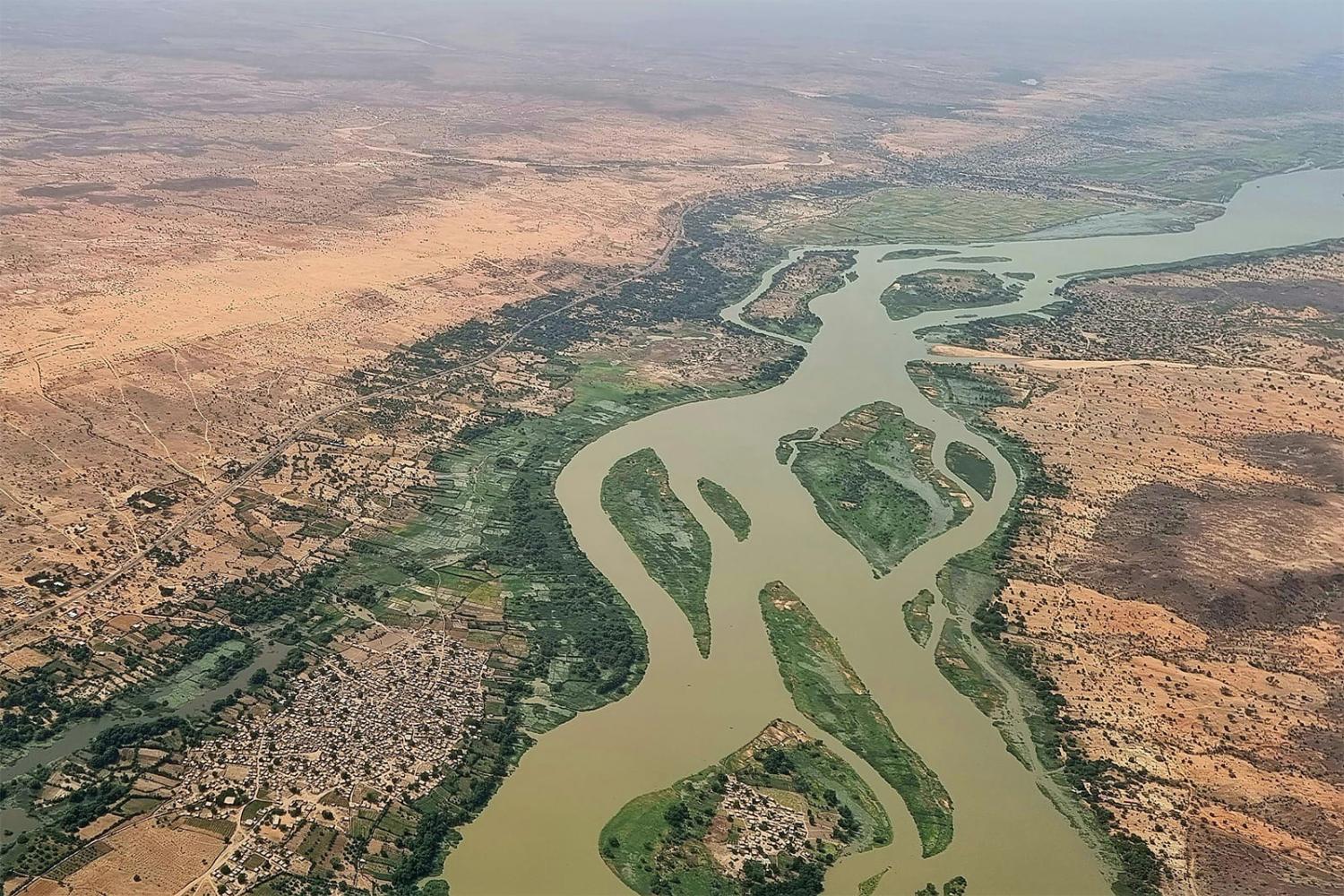
It is therefore imperative for the global community to provide climate funding to FCS to create stability and promote adaptation in these vulnerable regions. For instance, international development agencies are working to stabilise and strengthen the adaptability of the Sahel region in Africa, through undertakings like the Great Green Wall project, which seeks to improve political, ecological and humanitarian conditions by strengthening governance, combating desertification, promoting climate-resilient agriculture, improving food security and creating employment opportunities.
Challenges confronting climate finance in fragile and conflict-affected states
Even though climate finance has doubled since 2020, the growth is not consistent with the compounding effects of climate change, especially in regions vulnerable to conflict. The discrepancy between demand and supply stems from low investor appetite for programmatic, financial, environmental, and social safeguard risks, which are high in conflict-affected regions. It is necessary to address the underlying security and operational risks in FCS that prevent these regions from receiving and efficiently using funds.
Investors often avoid directly investing in areas with active conflict due to power instabilities and uncertain returns, and tend to prefer shorter investment horizons, whereas these states require long-term investments to overcome institutional challenges. Unstable governance mechanisms prevent these nations from effectively engaging international forums for additional funding, as long-term policymaking is virtually absent and institutions experience rapid turnover. Many of these countries are debt-ridden due to their complex pasts, and development loans, even at concessional rates, further deter them from seeking additional funding.
If a country does acquire funding, especially from private investors, corrupt bureaucracy and eroded institutional mechanisms create obstacles through rigid accreditation standards, complex project approval processes, and complicated monitoring and evaluation frameworks, hindering the delivery of funds to agencies and programmes responsible for mitigation policies and implementation.
Security issues and instability in FCS also prevent reliable local data collection on climate vulnerabilities, population needs, and environmental risks. Climate finance providers, however, enforce strict guidelines on historical climate and socio-economic data required to access funding, and this data gap precludes FCS from applying to major vertical funds for aid.
Recommendations to improve climate funding for fragile and conflict-affected states
Climate financing for FCS is a complex issue that must be addressed at the earliest. The compounding tribulations of climate change and conflict are corroding the liveability of these regions, pushing a considerable fraction of the global population into destitution, increasing the burden on the global economy, undermining commitments to human rights, and causing irreversible environmental damage.
To improve climate funding for Fragile and Conflict-Affected States, relevant international stakeholders:
- Must formally define FCS to ensure funding is directed to the most vulnerable countries
- Should create risk-tolerant hybrid financing models that blend public funds and private investments
- Must adopt climate and conflict policies informed by the historical and socio-economic nuances specific to each region
- Should ensure that humanitarian efforts after a climate shock also build resilience rather than remaining short-term
- Must provide resources to strengthen institutional capacity alongside environmental and humanitarian support
- Should create adaptable guidelines and knowledge-sharing mechanisms with local stakeholders to guarantee delivery of climate funds to the most impacted regions
- Should follow the example of the Green Climate Fund and launch a simplified approval process for FCS to access climate funds despite limited scientific data, while also prioritising traditional knowledge
- Must ensure that FCS receive climate funding mainly as grants and donations instead of loans, to prevent cyclical damage to already debt-ridden economies
These recommendations should be institutionalised through multilateral projects like the Green Climate Fund, while penalties should be imposed on UNFCCC Annex-I countries that fail to contribute to adaptation efforts in FCS. Resolving these compounding crises is in the best interests of the global community, as doing so will reduce forced displacement and the risk of wider armed conflicts. Stabilising and building peace in FCS through climate finance will allow these regions to become contributors to tackling the global climate crisis rather than remaining trapped in a vicious cycle.
Conclusion – restructuring climate finance to better support fragile and conflict-affected states
The global community must recognise that climate finance cannot adopt a one-size-fits-all approach. Climate financing needs to be restructured to better support the most vulnerable populations in FCS rather than focusing on quick returns from easier investments. Once nations start directing finances to FCS, the private sector may follow, helping these states break free from the vicious cycle of dependency and lessen their burden on the global community.
References
- AFDB. Great Green Wall Initiative. African Development Bank Group, May 27, 2024.
- Alberti, Caroline. The Cost of Inaction. Climate Policy Initiative, January 4, 2024.
- Bousquet, Franck. Fragile and Conflict-Affected Economies Are Falling Further Behind International Monetary Fund, January 21, 2022.
- Buchner, Barbara, Baysa Naran, Rajashree Padmanabhi, Sean Stout, Costanza Strinati, Dharshan Wignarajah, Gaoyi Miao, Jake Connolly , and Nikita Marini. Global Landscape of Climate Finance 2023 Climate Policy Initiative, November 2, 2023.
- Cao, Yue , Namita Khatri, Amir Khouzam, and Adriana Quevedo. Embracing Discomfort a Call to Enable Finance for Climate-Change Adaptation in Conflict Settings International Committee of the Red Cross, October 2022.
- Cao, Yue, Tilly Alcayna, Adriana Quevedo, and Jim Jarvie. Exploring the Conflict Blind Spots in Climate Adaptation FinanceSPARC Knowledge, 2021.
- Climate Diplomacy. Civil War in Darfur, Sudan Climate-Diplomacy.
- Earth Justice. How Climate Change Is Fueling Extreme Weather Earth Justice, October 1, 2024.
- Grayson, Catherine-Lune , and Amir Khouzam. Weathering the Storm: Reducing the Impact of Climate Risks and Environmental Degradation on People Enduring Armed Conflicts International Committee of the Red Cross, November 23, 2023.
- Gulati, Manisha , Yue Cao, Amir Khouzam, and Mauricio Vazquez. Climate Change, Conflict and Fragility: A Recipe for Disasters ODI: Think change, October 24, 2024.
- Hardaway, Adrianna. Overcoming the Fragility Barrier: Policy Solutions for Unlocking Climate Finance in Fragile States Mercy Corps, October 2023.
- ICRC. When Rain Turns to Dust: Understanding and Responding to the Combined Impact of Armed Conflicts and the Climate and Environment Crisis on People’s Lives International Committee of the Red Cross, July 7, 2020.
- ICRC. Working Together to Address Obstacles to Climate Finance in Conflict and Fragile Settings International Committee of the Red Cross. ICRC, 2021.
- Jaramillo, Laura, Aliona Cebotari, Yoro Diallo, Rhea Gupta, Yugo Koshima, Chandana Kularatne, Jeong Dae Lee, Sidra Rehman, Kalin I. Tintchev, and Fang Yang. Climate Challenges in Fragile and Conflict-Affected States Staff Climate Notes 2023, no. 001 (August 30, 2023).
- Jones, Lindsey. Closing the Adaptation Finance Gap in Fragile and Conflict-Affected Settings World Bank Blogs, 2024.
- Jones, Lindsey, Josue Banga, Benjamin Savely, and Arthur Guillaume Julien. Closing the Gap : Trends in Adaptation Finance for Fragile and Conflict-Affected Settings World Bank, September 16, 2024.
- Notaras, Mark. Does Climate Change Cause Conflict? - Our World Unu.edu, November 27, 2009. Oxfam International, December 6, 2023.
- Reda, Dima, and Catherine Wong. Climate Finance for Sustaining Peace UNDP, 2021.
- Siegfried, Kristy. Climate Change and Displacement: The Myths and the Facts United Nations High Commissioner for Refugees, November 15, 2023.
- Signé, Landry, and Ahmadou Mbaye. Renewing Global Climate Change Action for Fragile and Developing Countries The Brookings Institution, November 2022.
- Soubeyran, Éléonore, and Rob Macquarie. What Is Climate Finance? Grantham Research Institute. London School of Economics and Political Science, February 22, 2023.
- UNDP. What Is Climate Finance and Why Do We Need More of It? United Nations Development Programme, October 2, 2023.
- UNFCC. Conflict and Climate Unfccc.int, July 12, 2022.
- UNHCR, and PIK. Moving from Reaction to Action Anticipating Vulnerability Hotspots in the Sahel OSCDS, UNHCR, 2020.
- United Nations. Five Ways the Climate Crisis Impacts Human Security United Nations Climate Action. United Nations, 2023.
- United Nations Peacekeeping.Conflict and Natural Resources United Nations Peacekeeping, 2019.
- Werrell, Caitlin, and Francesco Femia. Climate Change as Threat Multiplier: Understanding the Broader Nature of the Risk The Center for Climate and Security, no. Briefer 25 (February 12, 2015).

Shivani Raheja
Student from the University of Edinburgh Business School’s MSc in Climate Change Finance and Investment programme