2 June 2025
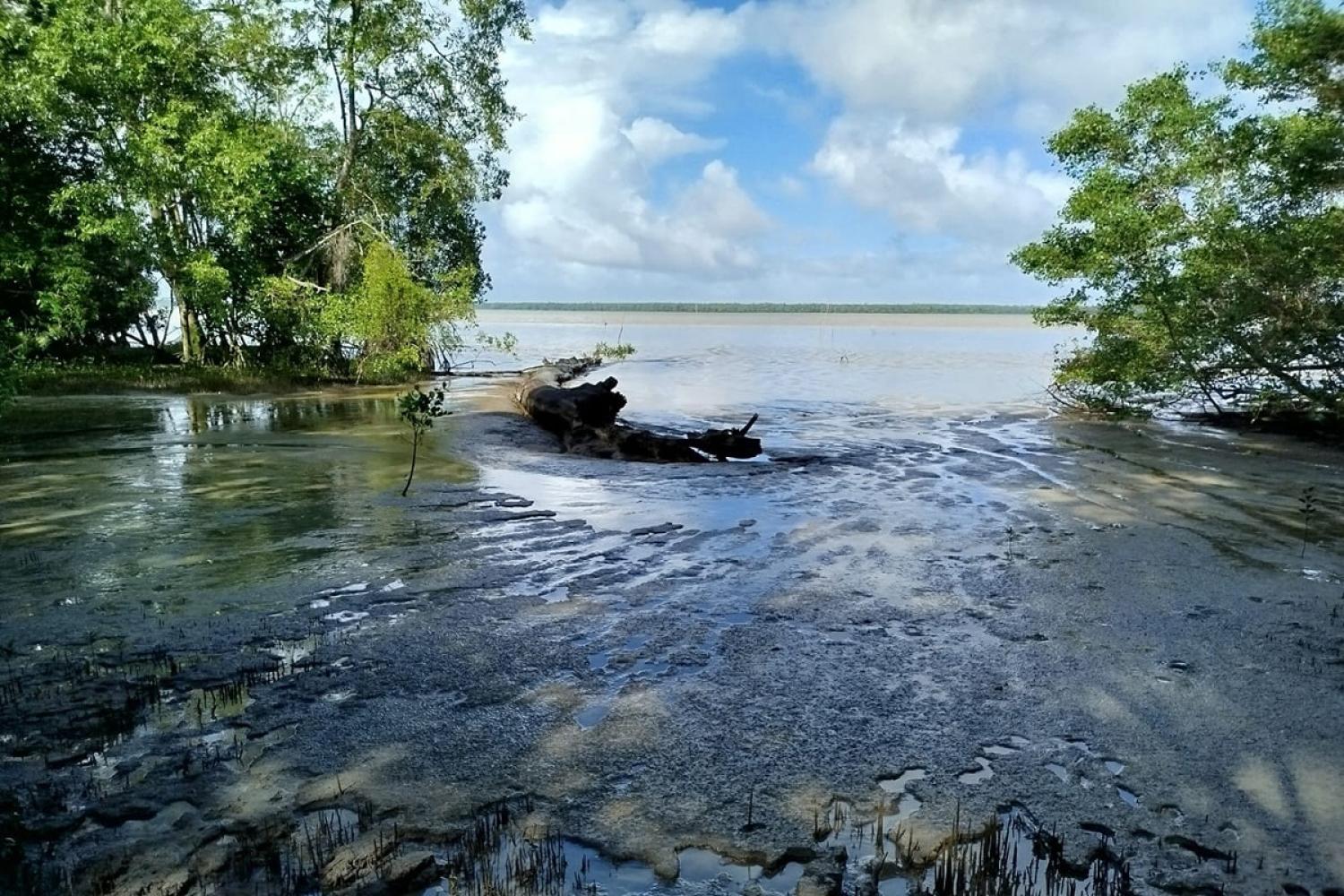
Suriname, like many other places in the world, is at risk of coastal erosion and flooding. Recently, scientists have observed changes in wave behaviour due to climate change, with impact of such extreme events more difficult to predict and existing flood protection mechanisms no longer fit for purpose. In Suriname, the coastal line has historically been protected by mangroves, however, due to human activities, this nature-based solution has been significantly depleted. Efforts to restore mangroves have had mixed results, partly because of the changing weather patterns, and partly because we still lack sufficient data to fully understand required condition for them to thrive.
At the same time, for coastal communities floods are a daily reality. They want solutions now, and hard engineering solutions, such as wave breakers, flood barrier and sea wall, seem to offer such protection, producing fast and visible impact. Long-term implications of such decisions are not obvious. The cost of building hard engineering solutions is substantial and includes not only contraction, but also maintenance cost, without which the level of protection will be reduced. The disruption of natural processes caused by such solutions, such as mangrove accretion and the movement of sandbanks, a phenomenon of movement of sediment from The Amazon along the coast, unique to this region, is also poorly understood.
Deciding on the most effective strategy for coastal protection is not a purely scientific question. It is also a political question. Allocating limited resources to specific needs is an exercise in translating satisfied communities into votes in the next elections. In such emotionally charged context, it is important to create an environment in which experimentation is safe and dialogue is possible. And this is why games are so important to consider. They can do just that.
In this project, we have created a board game of land management of an island, where the players have different skills and they work together to grow the country’s wealth and wellbeing, and protect it from weather events and destructive human activities. The players have a limited number of actions, which they can use to create nature-based or hard engineered solution, grow industry, cities, agriculture, or tourism. At the end of each round, they test the resilience of the island to different disruptive events.
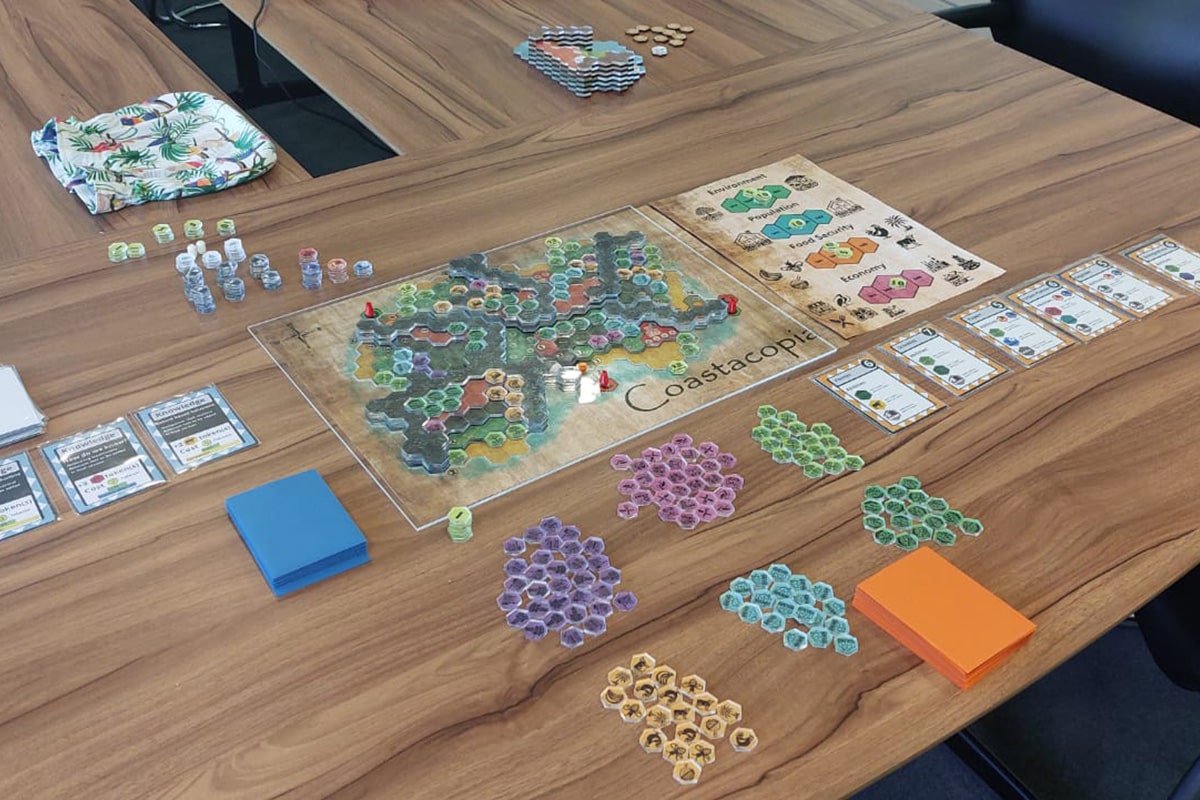
We do not expect that by the end of the game the players will have come up with the solution to flood protection in Suriname, but the initial trials have demonstrated that the game has proven very effective at starting a dialogue. For example, when a minister and a youth ambassador have observed the outcome of the game, they started discussing the possibilities in the Surinamese context. The game created a dialogue about a pressing and contested issue that is only possible, if you take the participant out of the set ways and offer them a fresh start.
Read more about the full project

Agnessa Spanellis
Senior lecturer of Systems Thinking at the University of Edinburgh Business School